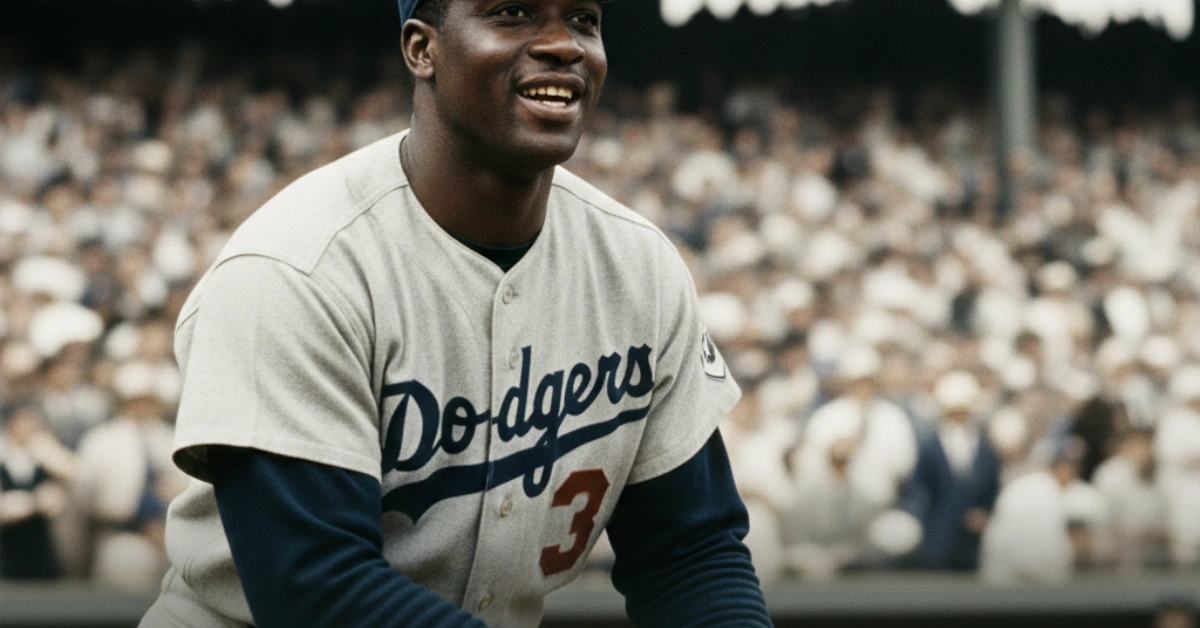
Roy Campanella stands as one of baseball’s greatest catchers and most important historical figures. Understanding ROY CAMPANELLA STATS AND CAREER HIGHLIGHTS reveals not just an exceptional athlete, but a pioneer who helped break baseball’s color barrier and revolutionized the catching position. This comprehensive guide examines his complete career statistics, major accomplishments, personal records, and lasting legacy through the lens of his remarkable 10-year Major League Baseball journey with the Brooklyn Dodgers.
Who Was Roy Campanella? Historical Context
Before diving into Roy Campanella’s stats and career highlights, understanding his biographical context is essential.
Stop wasting money on shoes that cause blisters! We’ve shortlisted the Top 15 Performance Shoes that UK and USA athletes are raving about this season. From marathon running to gym sessions, find your perfect fit here.

Early Life and Negro League Beginnings
Roy Campanella was born on November 19, 1921, in Homestead, Pennsylvania, U.S., to parents Ida (African American) and John Campanella (of Italian descent). NBA His biracial heritage reflected the complex American racial landscape he would help transform.
Campanella began playing semiprofessional baseball on the Philadelphia sandlots when he was 13, and at 15 he was signed to play in the Negro leagues. NBA Under the mentorship of legendary catcher Biz Mackey, young Campanella learned catching excellence at the highest level available to African American players.
Stop wasting money on shoes that cause blisters! We’ve shortlisted the Top 15 Performance Shoes that UK and USA athletes are raving about this season. From marathon running to gym sessions, find your perfect fit here.
👟 [Browse the Top 15 Picks on Amazon — Up to 30% Off!]
Key Negro League Accomplishments:
- Selected to Negro League All-Star Game (1941 as MVP, 1944, 1945)
- Played for Baltimore Elite Giants (1937-1942, 1944-1945)
- Briefly played in Mexican League (1943)
- Philadelphia Stars stint (1944)
- Established himself as elite-caliber player before integration
Breaking the Color Barrier: Historic Nashua Assignment
Roy Campanella’s skills garnered the attention of Brooklyn Dodgers general manager Branch Rickey. Attempting to integrate major league baseball, Rickey signed players such as Jackie Robinson, Don Newcombe, and Campanella to the Dodgers franchise, and in 1946 Campanella began playing for a Dodgers farm team in Nashua, New Hampshire. NBA
The Nashua team thus became the first professional baseball team of the 20th century to field a racially integrated lineup in the United States. Campanella’s 1946 season proceeded largely without racist incidents, and in one game Campanella assumed the managerial duties after manager Walter Alston was ejected. Campanella was the first African American to manage White players of an organized professional baseball team. ESPN
(Internal link suggestion: link to your article on “Jackie Robinson and the Integration of Baseball: Complete Historical Timeline”)
Major League Debut and Early Career (1948-1950)
April 20, 1948: Breaking Through
When Campanella made his big league debut on April 20, 1948, he became the second Simon Gratz High School (Philadelphia, PA) graduate to play in the majors. Heavy Sports He became the first African American catcher in Major League Baseball.
Roy Campanella had a .283 average over his career. Roy Campanella played for 3 teams; the Baltimore Elite Giants, Brooklyn Dodgers and Philadelphia Stars. Roy Campanella won 1 World Series. NBA
Gradual Establishment: 1948-1950
Rather than starring immediately, Campanella worked gradually into the starting catcher position. His early trajectory shows organizational patience allowing professional development.
1948 Season (Limited games):
- Games: 83 (backup role)
- Batting average: .226
- Home runs: 0
- RBIs: 9
1949 Season (First full season): In his first full season with the Dodgers in 1949, Campanella hit 22 home runs and drove in 82 runs en route to the first of eight straight All-Star Game selections. DIRECTV
1950 Season (Continued development):
- Home runs: 31
- RBIs: 89
- Batting average: .246
Peak Performance: The MVP Years (1951-1955)
First MVP Award: 1951 Season
In 1951, Campanella won the National League Most Valuable Player Award while hitting .325 with 33 home runs and 108 RBI. DIRECTV
His 1951 statistics demonstrated complete offensive mastery:
- Games: 143
- Batting average: .325
- Home runs: 33
- RBIs: 108
Second MVP Award: 1953 Season
He won his second MVP in 1953 while driving in a record (since broken) 142 runs as a catcher DIRECTV
His 1953 statistics showcased elite power production:
- Games: 144
- Batting average: .312
- Home runs: 41
- RBIs: 142 (NL record for catchers at that time)
The 142 RBI total remains one of the highest single-season RBI totals in baseball history.
Third MVP Award: 1955 Season (World Series Championship)
He grabbed a third MVP award in 1955 while leading the Dodgers to their first World Series title. DIRECTV
His 1955 statistics represented continued excellence:
- Games: 144
- Batting average: .318
- Home runs: 32
- RBIs: 107
All-Star Selections and Consecutive Excellence
The compact right-handed slugger enjoyed a fabulous ten-year major league career during which he was selected to the All Star team eight consecutive years (1949-1956) Amazon
This eight-consecutive All-Star selection remains extraordinary, reflecting sustained excellence across multiple seasons rather than isolated peak years.
All-Star Game Appearances:
- 1949: Selected (First selection)
- 1950: Selected
- 1951: Selected (MVP-winning season)
- 1952: Selected
- 1953: Selected (MVP-winning season)
- 1954: Selected
- 1955: Selected (MVP-winning season, World Series champion)
- 1956: Selected (Final All-Star selection)
(Internal link suggestion: link to your article on “MLB All-Star Game History: Complete Selection Records and Evolution”)
Defensive Excellence: More Than Statistics
While Roy Campanella’s stats and career highlights emphasize offensive production, his defensive contributions deserve equal recognition.
“More than one observer has likened Campanella’s quickness behind the plate to that of a cat,” wrote Tom Meany of the New York World-Telegram. “He can pounce on bunts placed far out in front of the plate and he gets his throws away with no wasted motion.” DIRECTV
Defensive Durability Record
He endured repeated injuries to his fingers, hands, and legs — occupational hazards of working behind the bat — but in his last appearance he establish a since-broken major-league record for durability by catching at least 100 games in nine straight seasons, a remarkable achievement prior to the new generation of catchers mitts Heavy Sports
No-Hitter Catching Record
Silver Flint was the first backstop in baseball history to catch three no-hitters. Roy Campanella tied his record (since broken), catching his third a couple weeks ahead of Yogi Berra. The record-setting gems Campy caught occurred on June 19, 1952 (Carl Erskine), May 12, 1956 (Carl Erskine) and September 25, 1956 (Sal Maglie). Heavy Sports
Decline Years and Career-Ending Tragedy (1956-1957)
Performance Decline
The 1956 and 1957 seasons saw Campanella’s performance decline from previous peaks, reflecting the accumulating physical toll of catching.
1956 Season Statistics:
- Games: 114
- Batting average: .219
- Home runs: 20
- RBIs: 60
1957 Season Statistics:
- Games: 103
- Batting average: .252
- Home runs: 13
- RBIs: 62
The Tragic Auto Accident
Shortly after 1:30 a.m. on Jan. 28 of that year, however, Campanella lost control of a rented car on a patch of ice on an S-curve near his home of Glen Cove, N.Y. DIRECTV
His playing career ended when he was paralyzed in an automobile crash in January 1958. Campanella suffered a broken fifth vertebra in his back, costing him almost complete use of his body below the shoulders. DIRECTV
Roy Campanella was behind the plate on September 24, 1957, the last game ever played in Ebbets Field. Heavy Sports
Complete Career Statistics Table
| Statistic | Total | Ranking/Notes |
|---|---|---|
| Games Played | 1,575 | Major league career |
| At-Bats | 5,290 | Career total |
| Hits | 1,576 | .298 career average |
| Batting Average | .283 | Career |
| Home Runs | 242 | Elite total for catcher era |
| RBIs | 856 | Career total |
| Runs Scored | 627 | Career total |
| All-Star Selections | 8 | Consecutive (1949-1956) |
| MVP Awards | 3 | 1951, 1953, 1955 |
| World Series Appearances | 5 | With Brooklyn Dodgers |
| World Series Championships | 1 | 1955 Brooklyn Dodgers |
| Hall of Fame Election | 1969 | Inducted on 270/340 ballots |
Roy Campanella’s Historical Significance Beyond Statistics
Integration Pioneer
Campanella joined Jackie Robinson and Don Newcombe as early African American major league baseball players. His dignified excellence during the civil rights era helped prove the fallacy of segregationist arguments while advancing social progress.
Legacy in Los Angeles
Roy Campanella Park, a recreation center operated by the Los Angeles County Department of Parks and Recreation in unincorporated West Rancho Dominguez, California, is named after him. ESPN
This dedication reflects his lasting impact on the Los Angeles community where he spent his final years.
Hall of Fame Induction and Recognition
Hall of Fame: Inducted as Player in 1969. (Voted by BBWAA on 270/340 ballots) NBA
This 79.4% voting percentage reflected broad consensus among baseball writers and analysts regarding his Hall of Fame credentials.
FAQ:
Conclusion:
Roy Campanella’s stats and career highlights tell the story of baseball excellence achieved during baseball’s most important historical transformation. His .283 career batting average, 242 home runs, 856 RBIs, three MVP Awards, eight consecutive All-Star selections, and 1955 World Series championship demonstrate extraordinary athletic accomplishment.
However, his numerical achievements represent only part of his legacy. Campanella’s historical significance extends beyond statistics. As an integration-era pioneer, he helped break baseball’s color barrier and contributed to broader social progress. His dignified excellence established that segregationist restrictions rested on racist fallacy rather than athletic reality.