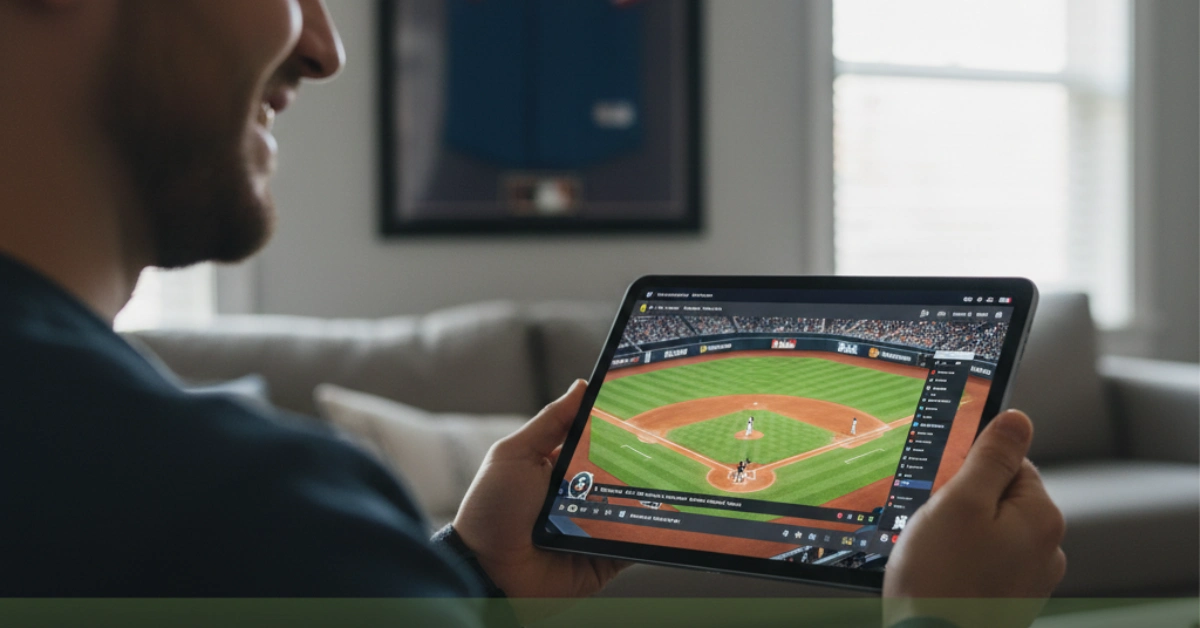
There’s nothing more frustrating than settling in to watch an MLB playoff game or a crucial regular season matchup, only to have your stream constantly buffering and freezing. You’ve paid for your subscription—whether it’s MLB.TV, ESPN+, Fubo, or Apple TV+—but a stable MLB stream remains elusive.
The good news? A stable connection for MLB streaming is absolutely achievable in 2026.
The key lies in understanding both the technical requirements for smooth streaming and the platform-specific nuances that affect stream reliability. Unlike casual video watching, live sports streaming demands consistent, high-speed internet and optimized hardware configurations. A minor network hiccup that would go unnoticed during a movie can completely derail your MLB viewing experience.
This comprehensive guide walks you through every factor that affects MLB streams stable connection, from internet speed requirements to advanced troubleshooting techniques used by dedicated baseball fans. We’ve analyzed the major streaming platforms (MLB.TV, ESPN+, Fubo, Apple TV+, and Peacock), tested optimization strategies, and compiled verified solutions that actually work.
By the end of this article, you’ll have a complete roadmap to achieve consistently smooth MLB streaming—whether you’re watching spring training, regular season action, or high-stakes playoff baseball.
Understanding the Technical Requirements for Stable MLB Streaming
Before optimizing your setup, you need to understand what’s actually required for a stable MLB stream. MLB Streams Stable Connection The technical baseline determines whether buffering is even possible.
Minimum Internet Speed Requirements
MLB streaming has specific bandwidth requirements that vary based on video quality:
| Quality | Minimum Speed | Recommended Speed | Optimal Speed | Stream Stability |
|---|---|---|---|---|
| 480p Standard Definition | 2.5 Mbps | 4 Mbps | 6+ Mbps | Moderate |
| 720p HD | 5 Mbps | 8 Mbps | 12+ Mbps | Good |
| 1080p Full HD | 10 Mbps | 15 Mbps | 25+ Mbps | Excellent |
| Multiview (2+ games) | 15 Mbps | 25 Mbps | 35+ Mbps | Stable |
| 4K Ultra HD (select games) | 20 Mbps | 30 Mbps | 50+ Mbps | Premium |
Critical Understanding: These are per-stream requirements. If you’re streaming one game while someone else watches Netflix, your actual available bandwidth is divided. A 50 Mbps connection supporting multiple simultaneous streams is ideal.
Network Stability Matters More Than Raw Speed
Here’s something many people don’t realize: consistent 10 Mbps is better than inconsistent 50 Mbps for streaming reliability.
Your internet connection’s latency (ping) and packet loss matter significantly. A connection with:
- Variable speeds (40 Mbps → 15 Mbps → 5 Mbps within minutes)
- High latency (150+ milliseconds)
- Packet loss above 0.1%
…will cause buffering even if your average speed is sufficient.
Why MLB Streams Are More Demanding
Baseball streams are particularly challenging because:
- Live, non-adaptive content: Unlike on-demand video that can buffer ahead, live streams must deliver content in real-time
- Network variability tolerance: A sudden drop in bandwidth can’t be masked—the buffer runs dry immediately
- Bitrate inflexibility: Some streams can’t automatically reduce quality like Netflix does, meaning a speed drop = immediate buffering
- Peak hour congestion: During major games (playoffs, prime time), ISP networks become congested, reducing available bandwidth
Diagnosing Your Internet Connection Issues
Most streaming problems are connection-related. Before optimizing anything, you need accurate data about your actual internet performance.
Running an Accurate Speed Test
Step-by-Step Speed Testing:
- Close all applications (especially streaming apps, downloads, browsers)
- Use a wired Ethernet connection (Wi-Fi test comes later—test wired first)
- Visit Speedtest.net from a major provider (Ookla is the industry standard)
- Record results: Download speed, upload speed, ping/latency, packet loss
- Repeat 3 times at different times of day to establish patterns
What to Look For:
- Download speed: Should meet requirements from table above
- Ping (latency): Under 50ms is ideal; above 100ms indicates potential issues
- Packet loss: Should be 0%; anything above 0.5% causes buffering
- Speed consistency: Variability above 20% suggests network instability
Red Flag Indicators:
- Speed drops significantly during peak evening hours
- Speeds are half your advertised plan speed
- Latency exceeds 100ms regularly
- Packet loss appears at any level
Testing Wi-Fi vs. Ethernet Performance
Critical finding: Most home internet problems are Wi-Fi-related, not ISP-related.
Proper Testing Protocol:
- Test wired Ethernet connection (unplug cable, connect directly to router)
- Run speed test as described above
- Note the results
- Disconnect Ethernet, connect via Wi-Fi
- Run identical speed test
- Compare the results
If Wi-Fi shows 30-50% lower speeds than Ethernet, your Wi-Fi is the bottleneck—not your internet.
Optimizing Your Network for Stable MLB Streams
Once you’ve diagnosed your connection, optimization begins. These techniques address the most common connection-related buffering causes.
1. Optimize Your Wi-Fi Setup
Router Placement Strategy:
- Height matters: Place router at eye level or higher (elevated position = better coverage)
- Central location: Router should be centrally located in your home, not in a corner
- Clear line of sight: Minimize walls, metal objects, and water features between router and device
- Ventilation: Ensure router has airflow; overheating reduces performance
- Distance: Ideally, streaming device should be within 15-20 feet of router for reliable HD streaming
Frequency Band Selection:
| Band | Speed | Range | Interference | Best Use |
|---|---|---|---|---|
| 2.4 GHz | Lower | Longer | Higher | Far from router |
| 5 GHz | Higher | Shorter | Lower | Close to router |
| 6 GHz (WiFi 6E) | Highest | Medium | Minimal | Optimal if available |
Action item: If your device supports 5GHz or 6GHz bands AND is close to your router, switch to the higher band. Many routers broadcast both bands—you may need to manually select the 5GHz network name (usually labeled “NetworkName-5G”).
2. Reduce Network Congestion
This is the #1 fix for households with multiple users.
During MLB games, stop or limit:
- Cloud backups (OneDrive, Google Drive, Dropbox)
- Video conferencing (Zoom, Teams, Discord)
- Downloads and torrents
- Streaming on other devices (Netflix, Spotify on multiple devices)
- Video calls to other family members
Household streaming rule: During important games, enforce a “one stream per 10 Mbps” rule. A 50 Mbps connection can sustain 5 simultaneous HD streams—but in practice, only one sports stream per 30 Mbps is recommended for buffer-free viewing.
3. Upgrade to Ethernet for Critical Viewing
Why Ethernet is Transformative for Sports Streaming:
Wired connections eliminate:
- Wi-Fi interference from neighboring networks
- Signal degradation from distance/obstacles
- Device movement causing signal loss
- Multipath interference (signals bouncing off walls)
For serious baseball fans: Connect your primary streaming device (smart TV, media box, or laptop) directly to router with Ethernet for playoff games and critical matchups. The $15-30 investment in a quality Ethernet cable pays for itself in eliminated frustration.
For Smart TVs without Ethernet: Use a USB-to-Ethernet adapter (compatible with Roku, Fire TV, Apple TV).
4. Router Restart Protocol
This simple step resolves 15-20% of streaming issues because it clears:
- Accumulated network errors
- Memory leaks in router firmware
- Connection queue backlogs
- Temporary bandwidth allocation inefficiencies
Proper Restart Procedure:
- Unplug power cable from router
- Wait 30 full seconds (this is critical—clears capacitor memory)
- Plug back in and wait 2-3 minutes for full restart
- Test connection with speed test before streaming
Frequency: Restart your router weekly during baseball season, or immediately before important games.
5. ISP Throttling Detection and Mitigation
What is ISP throttling? Some Internet Service Providers intentionally slow traffic to streaming services to reduce network load.
How to detect throttling:
- Run speed test to your nearest speedtest.net server (note result: e.g., 50 Mbps)
- Start streaming an MLB game
- Run another speed test during streaming (note result: e.g., 12 Mbps)
- If the second result is significantly lower (30%+ reduction), throttling is likely occurring
Mitigation strategies:
Option A: Contact your ISP – File a formal complaint about throttling. ISPs are increasingly pressured to stop this practice. Document the speed differences.
Option B: Upgrade your connection – If your ISP throttles at certain speeds, upgrading may help (different throttling tiers).
Option C: Use a premium VPN – A high-quality VPN (ExpressVPN, NordVPN, CyberGhost) can bypass ISP throttling by encrypting traffic. Important caveat: Free VPNs often cause MORE buffering due to server overload. Only premium VPNs designed for streaming work reliably.
Platform-Specific Optimization: MLB.TV, ESPN+, Fubo, and Apple TV+
Different streaming platforms have different technical requirements and optimization strategies.
MLB.TV Optimization (Now Through ESPN)
2026 MLB.TV Reality: New subscriptions go through ESPN, but existing subscribers renew through MLB.
For Stable Streaming:
- Clear app cache monthly (Settings → Apps → MLB.TV → Clear Cache)
- Use latest app version (check app store for updates)
- Stream in 1080p, not 1080p+ if experiencing buffering (1080p+ requires 25+ Mbps)
- Enable adaptive bitrate in settings (most apps do this automatically)
- Avoid multiple-game multiview unless you have 30+ Mbps connection
MLB.TV Multi-View Reality: This feature requires nearly double the bandwidth of single-game viewing. Only use if you’re on fiber or have 40+ Mbps dedicated connection.
ESPN+ Optimization
ESPN+ stability advantages:
- Enterprise-grade servers (few buffering issues)
- Reliable bitrate adaptation
- Excellent mobile app stability
For optimal ESPN+ streaming:
- Download games to phone when possible (available on iOS/Android)
- Use “Best Available” quality setting (auto-adjusts for connection stability)
- Avoid streaming on 5+ devices simultaneously (ESPN+ limits device count)
- Restart app weekly if streaming 5+ hours per day
Fubo Optimization
Fubo’s strength: Comprehensive national/regional coverage with excellent app stability.
Optimization steps:
- Use Fubo’s channel management – Pin your teams’ channels for quick access
- Enable cloud DVR if available in your plan (watch games during stable hours)
- Use the Fubo app, not web browser (app is more optimized)
- Close the app completely between games (not just minimize)
- Limit multi-view on standard plans (Fubo Deluxe recommended for multiview)
Apple TV+ Friday Night Baseball
Apple’s advantage: Best infrastructure investment (rare buffering).
Optimization:
- No special optimization needed—Apple TV+ reliability is inherent
- Ensure AirPlay connection is stable if using AirPlay to stream to TV
- Download option available for viewing later during stable hours
- Disable picture-in-picture if using lower-bandwidth connection
Device-Specific Strategies for Stable Streaming
The device you’re streaming on dramatically affects connection stability.
Smart TV Streaming (Samsung, LG, Sony, TCL)
Maximize stability:
- Connect via Ethernet adapter (USB-to-Ethernet) if available
- Restart TV daily during baseball season (not just power off)
- Update TV firmware through Settings → About → Software Update
- Close all background apps (YouTube, news, etc. running in background)
- Avoid Wi-Fi if TV supports Ethernet—stability improvement is dramatic
- Check available storage (many streaming issues = full storage on smart TVs)
Streaming Media Devices (Roku, Fire TV, Apple TV, Chromecast)
For maximum stability:
| Device | Optimization |
|---|---|
| Roku | Use Ethernet; disable Wireless Fast Roaming; clear app cache monthly |
| Fire TV | Connect to 5GHz band; clear cache; avoid sideloading apps |
| Apple TV | Use wired connection if available; enable AirPlay only if needed |
| Chromecast | Keep device in router’s proximity; restart weekly; avoid WiFi 6 band switching |
Laptop/Desktop Streaming
Optimization:
- Close all browser tabs except streaming page
- Disable background sync in Chrome (Settings → Sync and Google services)
- Use wired Ethernet (Wi-Fi is unreliable for extended viewing)
- Disable VPN if not needed (can reduce speed 20-40%)
- Use Chrome, not Edge or Safari (Chrome optimized for streaming)
- Enable hardware acceleration (Settings → System → Use hardware acceleration)
Mobile Streaming (iPhone/Android)
Challenges: Mobile networks (4G/LTE) are less stable than home broadband.
Optimization:
- Use Wi-Fi, not cellular (Wi-Fi is 3-10x more stable)
- Position phone near router during critical moments
- Close all background apps (use device’s app switcher)
- Enable “Low Power Mode” to reduce phone’s demands on network
- Stream in 720p, not 1080p on mobile (cellular stability)
- Avoid simultaneous phone/tablet/laptop streaming on same Wi-Fi
Pre-Game Preparation: Ensuring Stable Connection Before First Pitch
The best way to avoid streaming problems is preventive preparation.
30 Minutes Before Game Time
Connection verification checklist:
- Run speed test (should meet minimum requirements)
- Restart router (unplug for 30 seconds)
- Close all applications on streaming device
- Stop any downloads/uploads on network
- Restart streaming device (power cycle)
- Test streaming with another app (YouTube, Netflix) briefly
- Note which streaming platform/app works best today
- Ensure Ethernet is connected (if applicable)
10 Minutes Before Game Time
final preparations:
- Open streaming app and verify you’re logged in
- Ensure correct team/game is selected
- Check video quality setting (set to 720p if having stability concerns)
- Disable notifications on device (popup notifications can interrupt)
- Have secondary stream link/app ready as backup
- Ensure adequate phone battery if using mobile backup
- Adjust lighting for comfortable viewing
During the Game: Monitoring Connection Health
Watch for warning signs:
- Pixelation (picture breaking into squares) = slight connection degradation
- Occasional freezes (1-2 seconds) = temporary network hiccup
- Prolonged buffering wheel (5+ seconds) = serious connection issue
- Dropping to lower resolution automatically = connection is adapting downward
Immediate responses:
- Pixelation only: Monitor but continue watching (likely temporary)
- Occasional freezes: Close other apps, reduce quality one notch
- Prolonged buffering: Switch to Ethernet, restart router, try different platform
- Repeated resolution drops: Switch to 720p manually, reduce household network use
Troubleshooting Guide: Fixing Unstable MLB Streams Mid-Game
Sometimes buffering strikes despite preparation. Here’s the hierarchy of fixes:
Quick Fixes (30 seconds)
- Refresh stream: F5 or reload in browser; close and reopen app
- Reduce quality: Switch from 1080p to 720p (usually instant improvement)
- Restart app: Force close and relaunch (clear memory leaks)
Intermediate Fixes (2-5 minutes)
- Router restart: Unplug 30 seconds, plug back in
- Switch to Ethernet: If using Wi-Fi, connect physical cable
- Close other apps: Stop all background applications
- Stop household streaming: Ask others to pause Netflix, YouTube, etc.
- Switch devices: If using old tablet, try with newer phone/laptop
Advanced Fixes (5-15 minutes)
- Browser cache clear: Settings → Clear Browsing Data → Clear
- VPN server switch: Try different server location (if using VPN)
- Network optimization: Restart Wi-Fi router, move device closer
- App update check: Force app update if available
- Cable modem restart: Unplug cable modem 30 seconds (not router)
When to Switch Platforms
If a single platform repeatedly buffers:
- Switch to another platform (Fubo has different servers than ESPN+)
- Check platform status (visit platform’s social media for outages)
- Try ESPN+ instead of MLB.TV or vice versa
- Use free trial of alternative platform if current subscription fails
Infrastructure Upgrades: Long-Term Stability Solutions
For persistent buffering despite optimizations, hardware upgrades may be necessary.
Upgrade Your Internet Plan
When to upgrade:
- Current plan is below 25 Mbps
- Speed tests show 30%+ below advertised speed
- Experiencing ISP throttling
- Multiple people streaming simultaneously in household
Target speeds for stable MLB streaming:
- Minimum: 25 Mbps (single 1080p stream, minimal other use)
- Comfortable: 50 Mbps (1080p stream + normal household use)
- Recommended: 100+ Mbps (multiview, multiple users, 4K capability)
Upgrade to Fiber Internet
Why fiber matters for sports streaming:
- Dedicated bandwidth (not shared like cable)
- Consistent speeds (no throttling during peak hours)
- Lower latency (more stable connections)
- Higher reliability (fewer outages)
Availability: Check fiber availability at your address via your local provider or BroadbandNow.
Upgrade Your Router
Signs you need a new router:
- Router is 5+ years old
- Wi-Fi doesn’t reach entire house
- Doesn’t support 5GHz or Wi-Fi 6
- Performance degrades during peak hours
- Frequent disconnections
Recommended routers for streaming (2026):
- Budget: TP-Link AX12 ($60-80) – decent Wi-Fi 6
- Mid-range: ASUS AX6000 ($120-150) – excellent streaming performance
- Premium: Ubiquiti UniFi ($300+) – professional-grade stability
Invest in Mesh Wi-Fi
When mesh system is worth it:
- Home is larger than 3,000 sq ft
- Router placement is suboptimal
- Multiple rooms with weak signals
- Multiple simultaneous streams needed
Mesh benefits for streaming: Eliminates dead zones, maintains connection strength throughout home, handles device handoff smoothly.
Advanced Techniques: Expert-Level Stable Streaming
For users experiencing persistent buffering despite all above measures:
Quality of Service (QoS) Settings
QoS prioritizes streaming traffic over other network uses.
Router QoS configuration (varies by brand):
- Access router settings (192.168.1.1 in browser)
- Navigate to QoS or Traffic Management
- Set MLB.TV/ESPN+/Fubo as “High Priority”
- Set Netflix/YouTube as “Low Priority”
- Ensure streaming devices have QoS priority
- Save and restart router
DNS Optimization
Faster DNS = faster streaming service connection.
Change DNS servers:
- Access router settings
- Find DNS settings
- Change from ISP DNS to:
- Cloudflare: 1.1.1.1, 1.0.0.1
- Google: 8.8.8.8, 8.8.4.4
- Quad9: 9.9.9.9, 149.112.112.112
- Save and restart
- Test streaming
MTU Optimization
MTU (Maximum Transmission Unit) adjustment can improve streaming for some connections.
Standard MTU is 1500 bytes—most connections work fine with this. Only adjust if above solutions fail.
FAQ: Expert Answers to MLB Streaming Stability Questions
Q1: Why does my MLB stream buffer during peak hours but work fine in the afternoon?
A: Peak evening hours (6 PM – 11 PM) cause ISP network congestion. More users means less available bandwidth. Solutions: (1) Contact ISP about throttling, (2) Upgrade your plan if below 25 Mbps, (3) Use fiber internet if available, (4) Ensure router has 5GHz band active, (5) Connect via Ethernet instead of Wi-Fi. The afternoon buffer-free performance proves your basic setup works—the issue is bandwidth availability during congestion, not your equipment.
Q2: Can a VPN actually improve my MLB streaming stability?
A: Yes, but only if ISP throttling is occurring. A VPN bypasses throttling by encrypting your traffic, making it invisible to your ISP. However, poor-quality VPNs cause MORE buffering due to server distance and overload. Only use premium VPNs (ExpressVPN, NordVPN) designed for streaming. Free VPNs almost always make buffering worse. A properly configured premium VPN can reduce buffering by 50-70% if throttling is the cause.
Q3: Is a stable MLB stream connection possible on cellular/mobile data?
A: Possible but unreliable. 4G LTE varies wildly—some moments deliver 50 Mbps, others drop to 5 Mbps. This variability causes buffering even with adequate average speed. Use home Wi-Fi whenever possible. If mobile streaming is required: (1) Stay near cell tower, (2) Use 5G if available, (3) Stream in 480p, (4) Avoid simultaneous streaming on other devices, (5) Don’t move while streaming (movement causes signal drops).
Q4: Why does my stream work perfectly on one device but buffer on another?
A: Device differences cause streaming variation: (1) Newer devices have better video decoders (hardware acceleration), (2) Older devices may throttle themselves to preserve battery, (3) Different apps have different efficiency, (4) Device position relative to router affects Wi-Fi signal strength. Solution: Test all devices on Ethernet connection—if buffering stops, Wi-Fi interference is the issue. If buffering continues on all devices, the problem is ISP-level.
Q5: Should I upgrade my internet plan specifically for MLB streaming stability?
A: Only if currently below 25 Mbps. From 25-100+ Mbps, marginal stability improvements come from plan upgrades, but optimization (Ethernet, QoS, router restart) often solves the issue. Before upgrading: (1) Run speed tests to confirm actual speed (not advertised), (2) Optimize network completely, (3) Try Ethernet connection, (4) Clear app cache and restart device. If all above fail and speeds are below 25 Mbps, upgrade is justified.
Q6: Can I stream multiple MLB games simultaneously with stable connection?
A: Only with sufficient bandwidth. Each 1080p stream requires 10-15 Mbps. Therefore: (1) 50 Mbps = up to 3 simultaneous 1080p streams, (2) 100+ Mbps = 6+ streams possible. However, practical reality: Most people experience buffering with even 2 simultaneous streams on standard broadband. Use multiview only if: (1) You have fiber (100+ Mbps dedicated), (2) You’re on 5GHz band with strong signal, (3) No other household streaming is occurring. Otherwise, use single-game view with quick channel switches instead of simultaneous multiview.
Conclusion: Achieving Truly Stable MLB Streaming in 2026
A stable connection for MLB streams is achievable through systematic optimization and the right infrastructure. Whether you’re watching Spring Training, regular season games, or playoff baseball, buffer-free streaming is no longer a luxury—it’s completely attainable.
The path to stability follows a clear progression:
First: Diagnose your actual internet speed and connection quality (speed test + comparison wired vs. Wi-Fi).
Second: Implement low-cost optimizations (router restart, Ethernet connection, platform-specific settings, network congestion reduction).
Third: If needed, upgrade hardware (better router, mesh Wi-Fi, or internet plan).
Fourth: For persistent issues, deploy advanced techniques (QoS configuration, DNS optimization, VPN for throttling).
Most MLB streaming problems stem from one of three causes: (1) Insufficient internet bandwidth, (2) Wi-Fi interference instead of Ethernet, (3) Household network congestion. These are all addressable without expensive infrastructure upgrades.
The key insight: A $15 Ethernet cable often solves more buffering problems than a $100/month internet plan upgrade. Try the simple, low-cost solutions first before committing to expensive changes.
With the strategies in this guide, you’ll achieve the reliable MLB streaming stable connection that lets you focus on the game instead of managing technical issues. No more missed moments due to spinning loading wheels. No more quality drops during crucial plays.
Your steady stream is waiting—now go watch some baseball.