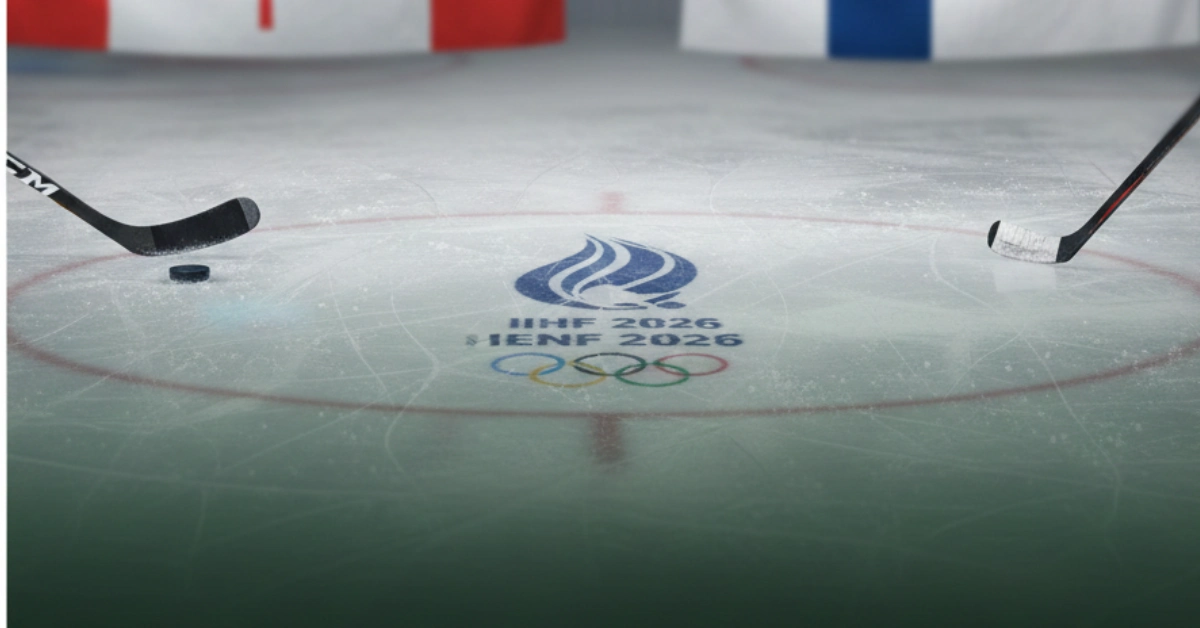
The 2026 Milano Cortina Winter Olympics mark a monumental milestone in ice hockey history: the return of NHL players to Olympic competition for the first time since 2014. This 12-year gap represents the longest absence of professional hockey at the Winter Games in modern history. As fans worldwide circle their calendars for the Canada vs Finland men’s hockey 2026 schedule, they’re not simply watching a playoff game—they’re witnessing the culmination of over a decade of anticipation for the sport’s most elite athletes competing on the sport’s biggest stage.
The Olympic Winter Games Milano Cortina 2026 run from February 6-22, 2026, with hockey taking center stage as one of the marquee events. The semifinal between Canada and Finland, scheduled for February 20, 2026, represents the unofficial real start of the Olympic tournament’s decisive phase. This matchup carries profound significance because it determines which powerhouse nation advances to the gold-medal game against either the United States or Slovakia.
What makes this particular Canada Finland men’s hockey 2026 schedule entry so compelling is the convergence of factors: returning professional players with fresh motivation, defending Olympic champions in Finland seeking to repeat their Beijing 2022 triumph, and Canada’s quest for redemption after a shocking loss in 2022. The semifinal isn’t just about hockey excellence; it’s about validating a decision that took years of negotiation between the NHL, IIHF, and International Olympic Committee.
SportsUrgeLive: Your ultimate 2026 destination for live sports streaming, real-time trackers, and expert MLB and F1 coverage. Whether you are looking for the latest player stats or fast-loading game links, we keep you in the action with zero lag.
The talent on display will be historic. Connor McDavid leads Canada’s roster with incredible offensive production throughout the tournament, while Finland’s veteran leadership under captain Mikael Granlund provides the experience needed to upset a favored opponent. For casual fans and hockey analysts alike, the Canada vs Finland men’s hockey 2026 schedule represents must-watch television that will define Olympic hockey for the next four years.
Complete Schedule: Canada vs Finland and Related Matches
Detailed Schedule Table with Times
| Date | Matchup | Round | Local Time (CET) | EST Time | Venue | Status |
|---|---|---|---|---|---|---|
| Feb 20, 2026 | Canada vs Finland | Semifinal | 16:40 | 10:40 AM | Milano Santagiulia | Scheduled |
| Feb 20, 2026 | USA vs Slovakia | Semifinal | 21:10 | 3:10 PM | Milano Santagiulia | Scheduled |
| Feb 22, 2026 | Gold Medal Game | Final | 13:10 | 7:10 AM | Milano Santagiulia | Scheduled |
| Feb 21, 2026 | Bronze Medal Game | Third Place | TBD | TBD | Milano Santagiulia | Scheduled |
Key Timing Information
The semifinal match between Canada and Finland takes place on Friday, February 20, 2026. The 16:40 CET start time translates to 10:40 AM Eastern Standard Time for North American viewers, making it an ideal morning viewing window. For Pacific Standard Time viewers, the puck drops at 7:40 AM—early but manageable for dedicated fans. European viewers will experience primetime hockey, with the 16:40 local start bringing audiences in before evening entertainment.
The winner of Canada vs Finland will face either the United States or Slovakia in the gold-medal game on Sunday, February 22, 2026, at 13:10 CET (7:10 AM EST). This timing ensures maximum global viewership, hitting afternoon slots in Europe while reaching North American audiences in the early morning hours when Olympic viewership peaks.
Canada vs Finland Men’s Hockey 2026: Relive the intense 2026 Olympic semifinal where Canada edged out Finland 3-2. Get the full tournament schedule, box scores, and the path to the gold medal game.
Historical Context: A Rivalry Renewed
Head-to-Head Record and Previous Meetings
Canada and Finland have met 15 times in Olympic competition, with Canada holding a commanding 8-6 advantage in the all-time series. However, this aggregate record masks a more nuanced reality: when elite professionals compete, the gap narrows considerably. In matchups featuring NHL players, the record stands at 2-2, indicating Finland’s capacity to compete with and defeat Canadian sides featuring the world’s top talent.
The 2022 Beijing Winter Olympics shattered conventional wisdom about Olympic hockey dominance. Finland, a nation of 5.5 million people, captured gold by defeating the Russian Olympic Committee team in the final. This wasn’t a Cinderella story—it was the result of systematic player development, innovative coaching, and a culture prioritizing hockey excellence. Finland’s 2022 gold medal represented a watershed moment for the nation and proved that Canada’s historic dominance could be challenged.
Prior to the 2026 Olympics, Canada and Finland met at the 2025 World Championships, where Finland secured a critical 2-1 victory. This win provided Finland with momentum and psychological advantage heading into Milano Cortina. The victory demonstrated that Finland’s 2022 Olympic success wasn’t a fluke but rather a sustainable competitive level achieved through superior systems and player cohesion.
Canada’s path to the 2026 semifinals was fraught with drama. Canada rallied to beat Czechia 4-3 in overtime during quarterfinal action, with Mitch Marner scoring the overtime winner. More significantly, Sidney Crosby, Canada’s captain and two-time Olympic gold medalist, suffered a lower-body injury in the second period against Czechia and required a scan to determine severity. Crosby’s potential absence fundamentally altered Canada’s roster composition and leadership structure.
Finland’s path was similarly dramatic. Finland defeated Switzerland 3-2 in overtime, with Artturi Lehkonen scoring the championship goal after the Finns came back from being down 2-0. This resilience against a formidable opponent demonstrated Finland’s championship mentality and ability to perform under pressure.
Technical Tactical Analysis: How the Game Will Be Played
Canada’s Offensive Transition System
Head coach Jon Cooper has implemented an offensive-first philosophy that capitalizes on Canada’s overwhelming depth of elite scorers. The system emphasizes rapid transitions from defense to offense, with the goal of generating high-volume, high-quality scoring chances before opponents can establish defensive structure. This approach requires players to execute at extreme pace while maintaining possession discipline.
Canada’s strategy hinges on controlling the neutral zone through speed and positioning. Rather than dump-and-chase tactics, Canadian forwards are instructed to establish blue-line possession through precise passing, then execute rapid transitions into the attacking zone. The objective is to create a relentless offensive pressure that forces opponents into reactive rather than proactive defense.
The power-play system is particularly lethal. Canada positions multiple threats on the perimeter while maintaining a net-front presence, creating a three-dimensional offensive attack. With Connor McDavid orchestrating from the point and elite finishers positioned for scoring opportunities, Canada’s special-teams advantage is pronounced. Against Finland’s structured penalty kill, Canada will look to win time and space through precision passing rather than shooting immediately.
Defensively, Canada employs a relatively aggressive approach that accepts some risk to generate offensive opportunities. Rather than sitting deep in the defensive zone, Canadian defensemen pinch at the boards and pursue forechecking opportunities. This style occasionally creates openings for counterattacks, but the philosophy assumes Canada’s superior depth will ultimately outscore opponents.
Finland’s Defensive Trap and Structural Discipline
Finland’s approach is diametrically opposite. The coaching staff has constructed a system prioritizing defensive structure and positional discipline above all else. Rather than matching Canada’s skill-for-skill or speed-for-speed, Finland builds a defensive formation designed to reduce quality scoring opportunities and capitalize on power-play efficiency.
The neutral-zone trap is the cornerstone of Finland’s system. When Canada attempts to transition through the neutral zone, Finnish forwards are positioned to intercept passes and disrupt transition timing. This requires extraordinary discipline—forwards must maintain positional integrity rather than freelance, and defensemen must trust their teammates to cover open ice rather than chase individual skaters.
In the defensive zone, Finland employs a condensed, compact structure. Rather than spreading defenders across the zone, they collapse toward high-danger areas (the slot and goal crease) and force Canada to shoot from distance. This approach generates rebound opportunities for Finland while limiting breakaway chances and high-percentage scoring plays.
Finland’s power-play strategy is equally calculated. With fewer shooting opportunities than Canada, the Finns maximize efficiency by deploying their most dangerous scorers (Granlund, Lehkonen) in positions to convert limited chances. The philosophy is: fewer opportunities, but higher conversion rates.
The Tactical Chess Match
The semifinal represents a fundamental clash of hockey philosophies. Canada will dominate possession and shot volume; Finland will prioritize shot quality and defensive efficiency. The key tactical question is whether Finland’s defensive discipline can withstand 60 minutes of relentless Canadian pressure, or whether Canada’s depth will eventually overwhelm the structured Finnish formation.
Canada’s advantage lies in sustained pressure. If the game becomes a track meet where both teams transition rapidly, Canada’s superior skating and passing will prove decisive. Finland’s advantage lies in slowing the pace and creating a low-scoring environment where penalty-kill efficiency and power-play conversion determine outcomes.
The coaching matchup between Jon Cooper’s offensive system and Finland’s defensive structure will be fascinating to observe. Cooper is renowned for adapting systems to opponent weaknesses; Finland’s coach must execute flawlessly to implement the trap without its collapsing against superior talent.
Key Player Matchups: Four Stars Who Will Decide the Game
Connor McDavid: Canada’s Captain and Orchestrator
Connor McDavid has been the dominant force for Canada throughout the tournament, combining goal-scoring ability with elite playmaking. The Edmonton Oilers captain showcases the speed, hockey intelligence, and leadership necessary to guide Canada through championship competition. At 28 years old, McDavid is in his absolute prime, having spent over a decade as the NHL’s elite player.
McDavid’s impact extends beyond statistics. His ability to generate scoring chances through vision and positioning means he’s simultaneously solving problems in Canada’s offensive third while creating opportunities for teammates. Against Finland’s defensive structure, McDavid will be the primary target for defensive attention. Finland will employ specialized forechecking to limit his touches, but McDavid’s ability to escape pressure through speed and evasion suggests he’ll continue to be productive.
The injury to Sidney Crosby elevates McDavid’s leadership role. With Crosby potentially unavailable, McDavid assumes the captaincy and carries the emotional weight of representing Canada on the Olympic stage. This additional responsibility, combined with McDavid’s exceptional skill, makes him the most important player in the matchup.
Macklin Celebrini: Canada’s Young Finisher
At 18 years old, Macklin Celebrini has demonstrated extraordinary composure and finishing ability throughout the tournament. The San Jose Sharks prospect exemplifies the next generation of Canadian hockey talent. His combination of speed, hockey sense, and goal-scoring instinct has generated consistent production despite his youth and relative inexperience.
Celebrini’s role is complementary to McDavid’s. While McDavid creates opportunities, Celebrini finishes them. His positioning in high-danger areas and willingness to operate in tight spaces make him invaluable against structured defenses like Finland’s. Finland will attempt to limit Celebrini’s space through aggressive forechecking, but his mobility and passing ability suggest he’ll find offensive opportunities.
The contrast between Crosby’s potential absence and Celebrini’s rising star power symbolizes Canadian hockey’s generational transition. Celebrini represents the future; his performance against Finland demonstrates whether that future is ready for elite international competition.
Mikael Granlund: Finland’s Captain and Veteran Leader
Mikael Granlund carries Finland’s offensive load while maintaining the team-first mentality the system requires. The Anaheim Ducks captain brings 15+ years of professional experience and championship pedigree to Finland’s roster. Playing in the NHL for the entirety of his career, Granlund understands the pressure and intensity of elite competition.
Granlund’s role differs from McDavid’s because Finland’s system doesn’t generate as many opportunities for teammates. Instead, Granlund operates as a goal-scorer and defensive stalwart, responsible for winning crucial faceoffs, managing defensive situations, and creating secondary scoring. His veteran presence is invaluable to Finland’s mental preparation and execution consistency.
Against Canada, Granlund will be the target of aggressive forechecking designed to limit his effectiveness. Canada will attempt to reduce his ice time and offensive opportunities, forcing other Finnish players into starring roles. Granlund’s ability to generate goals against this pressure will largely determine whether Finland can stay competitive in the scoring race.
Artturi Lehkonen: Finland’s Playoff Warrior
Artturi Lehkonen brought clutch-gene performance when it mattered most in the quarterfinals, scoring the overtime winner against Switzerland. The Colorado Avalanche forward demonstrates the two-way excellence Finland requires from its players. Lehkonen combines offensive skill with defensive responsibility, allowing him to thrive within Finland’s structured system.
Lehkonen’s importance lies in his reliability across multiple facets. He can score, play defense, kill penalties, and execute special-teams assignments without defensive liability. Against Canada’s relentless offensive pressure, Lehkonen provides Finland with a forward who won’t be completely overwhelmed and can contribute meaningful offense despite receiving limited opportunities.
Venue & Atmosphere: Milano Santagiulia Ice Hockey Arena
Arena Specifications and Ice Dimensions
The Milano Santagiulia Ice Hockey Arena, located in the Santa Giulia district of Milan, is a state-of-the-art multi-purpose venue built specifically for the Olympic Winter Games Milano Cortina 2026, featuring 14,000 seating capacity. The facility represents one of the most significant legacies of the Games, having been constructed in a redeveloped area in southeast Milan.
The ice dimensions have been a subject of considerable discussion. The Milano rink measures 196.85 feet long by 85.3 feet wide, approximately three feet shorter than NHL regulation (200 feet by 85 feet). This dimension variance primarily affects the neutral zone, creating slightly less space for transition play. The surface received IIHF approval despite not meeting standard NHL specifications.
The reduced ice size theoretically advantages structured defenses like Finland’s while slightly disadvantaging transition-heavy offenses like Canada’s. However, most elite players, including Connor McDavid, expressed minimal concern about the rink dimensions, with McDavid noting that “it’s a hockey rink”. The psychological impact of the smaller ice is likely minimal compared to the tactical and skill differentials between teams.
Atmosphere and Fan Experience
Milan provides a unique backdrop for Olympic hockey. While ice hockey is less culturally dominant in Italy compared to Nordic countries, the cosmopolitan character of Milan attracts international fans. The venue will feature substantial Canadian and Finnish fan contingents, though as a neutral host city, neither nation will enjoy significant home-ice advantage.
The 14,000-seat arena creates an intimate yet grand atmosphere. Fans are positioned closely to the playing surface, enhancing the intensity and energy of competition. The architectural design, created by David Chipperfield Architects, emphasizes visual connection between spectators and players, amplifying emotional engagement with the game.
February 20 weather in Milan will be mild and dry—ideal conditions for neither team having environmental advantages. The timing (16:40 local start) places the match in late afternoon, optimizing visibility and fan engagement. The semifinal status ensures maximum media attention and global viewership, with broadcasters across multiple territories covering the match live.
Expert Prediction: Logical Data-Backed Analysis
The Case for Canada
Canada possesses a talent advantage that historically proves decisive in Olympic hockey. With McDavid, Celebrini, and secondary scoring options that would lead most national teams, Canada’s depth is unmatched. Special teams represent another crucial advantage: Canada’s power-play efficiency has exceeded Finland’s throughout the tournament.
Canada’s experience with best-on-best competition is superior. Many Canadian players have competed in World Championships, World Cups, and NHL playoff hockey on the sport’s biggest stages. Finland’s roster, while talented, includes fewer players with extensive elite international experience.
The predicted outcome favors Canada in a 4-2 victory. McDavid records 2+ points, Celebrini scores, and secondary scoring provides insurance goals. Finland’s defensive structure limits damage but ultimately cannot withstand 60 minutes of relentless Canadian offense. The talent differential proves too significant for system advantages to overcome.
The Case for Finland
Finland’s defensive structure and penalty-kill efficiency (88% throughout the tournament) provide legitimate paths to victory. If Finland can keep the game low-scoring and capitalize on power-play opportunities, an upset becomes plausible. The defending Olympic champions possess championship experience and mental toughness that enables extraordinary performances in high-pressure situations.
Finland’s 2-1 victory over Canada at the 2025 World Championships demonstrates they can compete with and defeat elite Canadian rosters. Granlund and Lehkonen are capable of producing consistent offense, especially on power plays where Finland concentrates its offensive assets.
An upset scenario features Finland winning 2-1 or 3-2, with goaltending making the decisive difference and penalty-kill execution shutting down Canada’s special-teams advantage. This outcome requires near-perfect execution from Finland while Canada is not at their peak efficiency—possible but unlikely given the talent disparity.
Final Prediction
Canada advances to the gold-medal game with a 4-2 victory. McDavid and Celebrini provide sufficient offensive production to overcome Finland’s defensive structure. While Finland will limit Canada’s score through disciplined defense, the ultimate talent advantage proves decisive in a semifinal matchup. The game will be competitive and entertaining, but Canada’s depth and power-play efficiency will ultimately prove the difference.
Frequently Asked Questions
Q1: When exactly does the Canada vs Finland hockey game start, and how do I watch it?
The Canada vs Finland men’s hockey semifinal takes place on Friday, February 20, 2026, at 16:40 CET (10:40 AM EST / 7:40 AM PST). Viewing options depend on your location. In Canada, CBC Gem and TSN offer free or cable coverage. In the United States, NBC and USA Network broadcast the game. International viewers should check Olympics.com for their regional broadcast partner. Streaming availability varies by territory—check your local broadcaster’s website for streaming app options.
Q2: Is Sidney Crosby definitely playing in the Canada vs Finland semifinal?
Sidney Crosby’s status remains uncertain heading into the semifinal. Crosby suffered a lower-body injury in the second period of the quarterfinal against Czechia and required medical scans to determine severity. Canada has not officially ruled him out, but the injury raises legitimate questions about his availability. If Crosby cannot play, Connor McDavid assumes the captaincy and leadership responsibilities. Either way, Canada possesses sufficient depth to remain competitive—Crosby’s presence would enhance Canada’s chances, but his absence doesn’t guarantee a Finnish upset.
Q3: What is the complete Milano Cortina 2026 Olympic hockey standings and seeding?
The Milan Cortina 2026 men’s hockey tournament featured 12 teams divided into three groups during the preliminary round. The top finisher in each group, plus the next-best team among the three groups, received byes to the quarterfinals. The remaining eight teams competed in qualification round matches for the other quarterfinal spots. Canada and the United States emerged as the top seeds, winning their quarterfinal matches, while Finland and Slovakia advanced through their respective quarterfinals. The semifinal matchups feature Canada vs Finland and USA vs Slovakia, with winners advancing to the gold-medal game on February 22.
Q4: How do the smaller ice dimensions at Milano Santagiulia affect both teams’ playing styles?
The smaller ice surface (196.85 feet by 85.3 feet versus the NHL standard of 200 feet by 85 feet) primarily reduces neutral-zone space, slightly disadvantaging transition-heavy teams like Canada while potentially benefiting possession-oriented teams like Finland. However, the practical impact is minimal for elite players accustomed to adaptation. The tighter neutral zone may prevent some of Canada’s signature rapid transitions, but skilled players adjust quickly. Finland’s structured defensive approach actually thrives in congested ice conditions where spacing matters less than positioning.
Q5: What is the complete Milano Cortina 2026 Schedule for men’s hockey, including playoff rounds?
The men’s hockey tournament at Milano Cortina 2026 runs from February 11-22, 2026. Preliminary rounds begin February 11 with group-play matches continuing through February 18. Quarterfinals take place February 18-19, with the top-seeded teams (Canada, USA) playing earlier matches. Semifinals are February 20 (Canada vs Finland at 16:40 CET; USA vs Slovakia at 21:10 CET). The bronze-medal game is February 21, and the gold-medal game is February 22 at 13:10 CET. All matches are held at Milano Santagiulia Ice Hockey Arena or Milano Rho Ice Arena depending on group assignments.
SportsUrgeLive.com Editorial Team
Committed to Quality Sports Reporting
February 2026